


































































































An honorary doctorate is a “High Level Academic Recognition” granted by a University to a recipient without completion of the normal University courses for that degree. Universities grant them to honor the recipient, while also benefiting the University by association.
A regular degree, you can use for academic improvement like joining a higher course.An honorary doctor is a status symbol it cannot be used for promotion, joining a higher education, etc.
Yes, it is fully legal throughout the world; it can be even apostilled as any regular degree (Attested by a notary public appointed by a government). You can use the title as follows for example Dr. Edward PhD (hc) “hc ” stands for Honoris Causa means for the sake of honor.

To raise funds for charity and to cover research development expenses.
Personnel with outstanding career and potentials along with professionalism with special contribution at State or National level in the society upon the educational, scientific works, cultural and peace activities or any other humanitarian activities deserves an honorary degree. You too may qualify for the highest degree available on this planet.
This program is offered only to a select group of accomplished individuals such as yourself. As a professional, a degree or additional degree will allow you to make a greater impact. The expedient way of showing the world your knowledge, abilities, experience and talents is with your degree and use of your titles.
We invite applications for honorary doctorate (honoris causa) degrees (Latin: “for the sake of the honour”) from experienced personnel in various disciplines who have rich experience in their respective field.

The following specific criteria are used by the Honorary Degrees Committee in its consideration of candidates. The Committee’s goal each year is to present a slate of recipients across a range of academic disciplines and non-academic areas of achievement. Honorary degree recipients, when possible, will be chosen to match the purposes of the Convocation at which the degree is to be granted. Those in category (a). will predominate if possible; those in categories (b) and (c) will normally number less than half of the recipients in category (a) unless the Convocation is being called for a special reason

Nominations: At least once annually, a call for nominations will be broadcast widely by the University Secretariat to the university community, using the traditional outlets and any additional avenues suggested by members of the Honorary Degrees Committee. Nominations may be submitted at any time to the University Secretary using the form
Maintenance of Lists: The initial screening of the nomination will be made by the Senate Secretariat to ensure that the nomination adheres to these guidelines. Names will be added to the list for a period of three years from the date of nomination, at which time if the nominee has not been selected, the name will be deleted. If the person is re-nominated, and if the nomination is still valid according to these guidelines, the name will again be added to the list for an additional three year period.
From the active list of nominations, the Honorary Degrees Committee will select prospective degree recipients as required in the annual convocation cycles. Once a prospective degree recipient has been identified and agreed upon by the Committee, two members of the committee will be assigned to the nomination file in order to execute due diligence, based on publicly available information, to ensure that the nomination conforms fully to the selection principles and criteria.
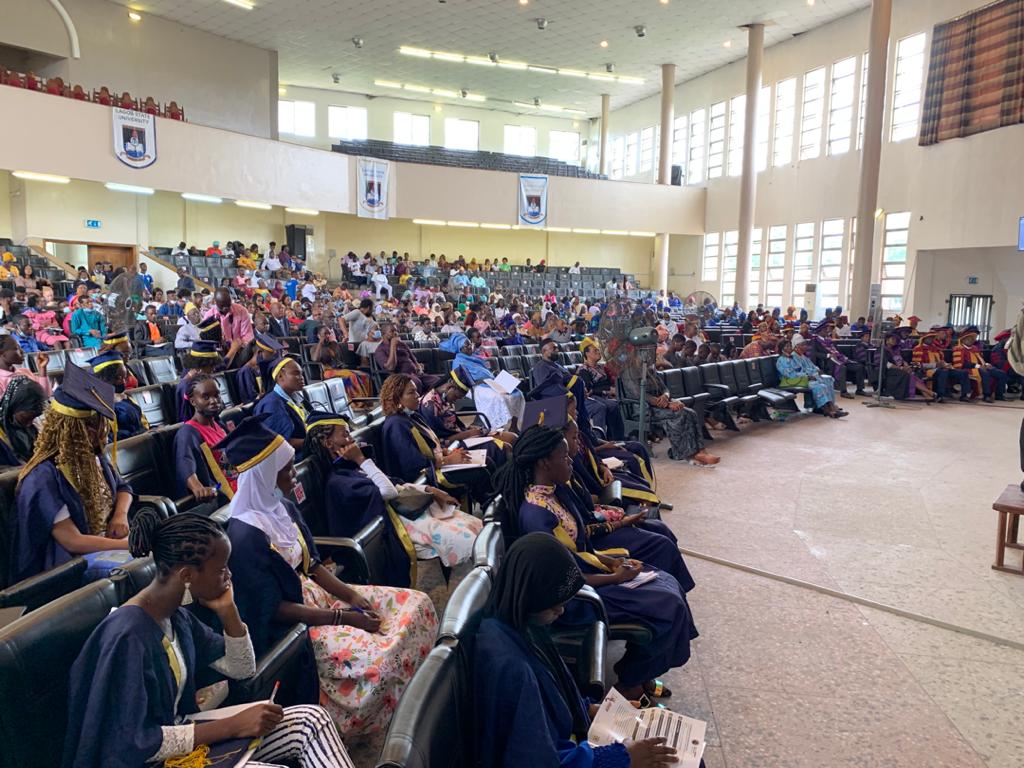
Nominators will be invited to participate in the conferral of the degree as hooders, presenters or hosts, where and when possible, on the basis of their relevant relationship to the field of accomplishment of the nominee. Selection of these invitees will be determined by a group comprising the President, Vice Chancellor, AVC, Director of Convocation, and Secretary of Senate.
This nomination must be written under Freedom of Information guidelines. Please try and restrict your information to what is available in the public domain. Where it is necessary to include private information this must be clearly marked as such, i.e. “Information not in the public domain”.
Nominations should be submitted on the forms provided by the Co- Ordinator ( Nomination Committee ) (please note that a nomination not submitted in this format is difficult to assess and the nomination is thus likely to be undermined):
The Honorary Degrees Committee is appointed annually by Senate and consists of the Registrar and such other members of Senate as determined from time to time by Senate. The duty of the Committee is to select persons to be recommended to Senate for the conferment of Honorary Degrees.

(Common for Honorary Doctorate & Honorary Awards) Nominations submitted without the following documents will be returned to the Nominator:
A letter from the Nominator describing reasons for nominating the Nominee, including contributions or special accomplishments of the Nominee, and any other information which the Nominator feels may be pertinent to the nomination.
Nominee’s abridged curriculum vitae containing details such as education, a field of endeavor a short description of publications (if any), specials awards, and distinguished service.
A short biographical summary (maximum 200 words), which will form the basis of the citation at convocation should the Nominee be chosen as an honorary degree recipient.

Honorary degree recipients are invited to give the Convocation address but may decline the invitation to do so. Honorary degrees are not awarded in absentia. Honorary degrees are not awarded posthumously. An exception may be made in the case of the honor having been accepted and arrangements made for its awarding prior to the death of the nominee. The citation for the honorary degree should be no longer than three minutes in length. In accordance with Council Bylaws, “each recipient of an honorary degree shall be presented for admission [to the degree] by the Director or by a person designated for that purpose by the Director
The Senate may revoke an honorary degree and all the rights and privileges connected therewith.” The Senate would consider revoking the degree on the recommendation of the Honorary Degrees Committee, by means of a vote.
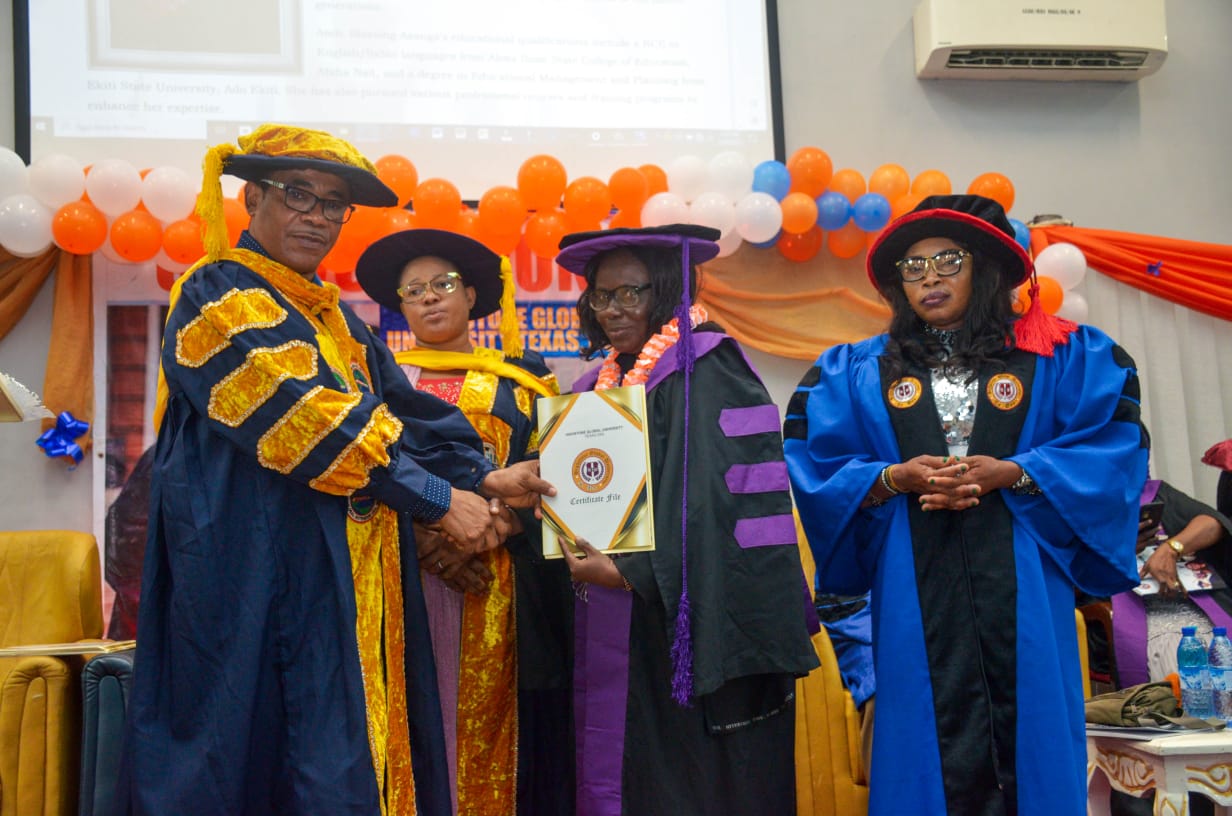
Once your Doctorate degree has been conferred at a Doctorate ceremony either in person or in absentia, you will automatically receive a Doctorate degree certificate. This will be either presented to you by your Co-Ordinator on the day of the Convocation ceremony or posted to you after the event. For all ceremonies, if you have not received your degree certificate within three months of the date of your ceremony and you fail to notify us of this within that period, you will be charged for a replacement certificate. Students who have completed an award bearing non-matriculated course (certificate or diploma) with the Department for Continuing Education will receive an award certificate from the Department. Electronic copies, PDFs or scanned versions of certificates cannot be issued at any time.

If your Doctorate degree certificate is lost, stolen or damaged, you can order a replacement certificate at a cost. Please note that students are only permitted to have one copy of their certificate in their possession at any one time, so multiple copies cannot be requested.
Upon recommendation by the President and approval by the Board of Trustees, honorary degrees are awarded to individuals who have achieved unusual distinction in service to the University and/or society in such areas as research, scholarship, education, the arts, humanities, the professions, business, government service, civic affairs, human rights, humanitarian outreach, social activism, innovation and invention. The selection of honorary degree recipients should be made in a manner that will bring honor to both the recipients and the university. Honorary degrees generally will be awarded only at official commencements or at special convocations held on the campus of the university.

No limit is set on the number of honorary degrees that may be awarded, but the number should never become so large as to diminish their significance or importance. Honorary degrees will not be awarded in absentia. Honorary degrees will not be awarded to members of the Board of Trustees or the Board of Regents while they are serving in that capacity. Honorary degrees will generally not be awarded to current staff or faculty members. All matters pertaining to the nomination and selection of honorary degree candidates are confidential.
[Note: Parts IV-VII of this Regulation (and all other University Regulations) are Regulations Resource Information – the contents of which are not approved by the Academic Senate or Board of Trustees, and are to be updated from time to time as determined appropriate by the cognizant Policy Officer and the Institutional Policy Committee, as per Policy 1-001 and Rule 1-001.]