Highstone Global University's Information Technology Services powers a seamless, secure, and borderless educational ecosystem. We do not merely maintain systems. We engineer the invisible infrastructure that connects a global student body, enables world-class research, and protects institutional integrity across every continent and time zone.


Information Technology Services at Highstone Global University exists to render technology invisible.
When our systems function at peak performance, students forget they are learning online. Faculty forget they are teaching across oceans. Researchers forget they are collaborating across institutional boundaries.
Our mission is to make the digital environment so intuitive, so reliable, and so secure that the only thing users notice is the quality of their intellectual engagement.
As an online and distance learning institution, HGU does not operate technology as a support function. Technology is our campus. It is our classroom, our library, our laboratory, and our community square.
Information Technology Services is therefore not an auxiliary department but a core institutional capability upon which every educational promise depends.
Unified, cloud-native learning platform built for global distributed education.
Defense-in-depth security, encryption, authentication, and privacy protection.
24/7 multilingual help, accessibility, device guidance, and cloud software access.
Click each tab and open the toggles to read the complete content.
The HGU Digital Campus is a unified, cloud-native platform designed specifically for the demands of global distributed education.
It is not an off-the-shelf learning management system with institutional branding applied.
It is an integrated ecosystem engineered to deliver consistent, high-fidelity educational experiences regardless of student location, device, or connectivity constraints.
The platform operates on redundant cloud infrastructure with automatic failover across multiple geographic regions.
This ensures that a student in Lagos experiences the same system responsiveness as a student in London or Los Angeles.
Load balancing algorithms distribute traffic intelligently, preventing congestion during high-usage periods such as examination windows or live synchronous seminars.
The user interface is built on responsive design principles, adapting seamlessly to desktop computers, tablets, and mobile devices.
Students in low-connectivity environments benefit from offline sync capabilities, allowing download of course materials, assignment submission queuing, and discussion forum participation that synchronizes when connectivity resumes.
The HGU Student Portal consolidates all academic and administrative functions into a single authenticated environment.
Students access course content, submit assessments, track academic progress, manage financial accounts, schedule advising appointments, and engage with student organizations without navigating multiple disconnected systems.
Faculty access teaching tools, gradebooks, analytics dashboards, research collaboration workspaces, and administrative workflows through a unified faculty interface.
Recognizing that many HGU students in emerging markets rely primarily on mobile devices for internet access, the platform is engineered with mobile-first design principles.
Native applications for iOS and Android provide full functionality, including video conferencing participation, document editing, multimedia consumption, and push notification delivery for academic deadlines and institutional announcements.

Highstone Global University handles sensitive personal information, academic records, financial transactions, and research data across international jurisdictions.
Information Technology Services maintains security posture that meets or exceeds standards applicable to financial services and healthcare institutions.
The security architecture employs defense-in-depth principles with multiple overlapping protective layers.
Perimeter security includes next-generation firewalls, intrusion detection and prevention systems, and distributed denial-of-service mitigation.
Network segmentation isolates critical systems from general user traffic.
Endpoint protection covers all institutional devices and managed student access points.
Authentication systems support multi-factor verification, biometric options where device capability permits, and risk-based adaptive authentication that escalates verification requirements when anomalous access patterns are detected.
Single sign-on integration reduces password fatigue while maintaining security boundaries between functional modules.
All data in transit is encrypted using industry-standard transport layer security protocols.
Data at rest is encrypted using advanced encryption standards with key management that meets regulatory requirements across HGU's operating jurisdictions.
Information Technology Services maintains a formal incident response plan with defined escalation procedures, forensic investigation capabilities, and regulatory notification obligations.
Business continuity planning ensures that critical academic functions can continue during system disruptions, with recovery time objectives measured in minutes rather than hours for essential services.

HGU students enter the institution with varying levels of technological proficiency, access to hardware, and connectivity quality.
Information Technology Services provides comprehensive support that addresses this diversity and ensures that technology never becomes a barrier to educational participation.
The Technical Support Center operates twenty-four hours a day, seven days a week, with multilingual support staff capable of assisting students in English, French, Spanish, and Mandarin.
Support channels include live chat, email ticketing, video call assistance, and a searchable knowledge base with guided troubleshooting tutorials.
Common support categories include account access and password recovery, learning management system navigation, video conferencing setup and troubleshooting, document format compatibility, mobile application installation, and connectivity optimization for low-bandwidth environments.
All platforms and services meet Web Content Accessibility Guidelines standards.
Assistive technology integration includes screen reader compatibility, keyboard navigation alternatives, closed captioning for video content, adjustable text sizing and contrast options, and alternative format delivery for course materials.
Students with documented accessibility needs receive individualized technology accommodation assessments.
Information Technology Services publishes comprehensive guidance on minimum and recommended device specifications, optimal browser configurations, and connectivity requirements for various course activities.
For students in regions with unreliable infrastructure, the Center provides specific recommendations for offline workflows, data compression tools, and affordable connectivity solutions.
Every HGU student receives institutional email with one hundred gigabytes of cloud storage and integration with Microsoft 365 or Google Workspace productivity suites.
Licensed software access includes statistical analysis packages, design and multimedia tools, citation management applications, and discipline-specific software required for coursework.
Virtual application streaming allows students to run computationally intensive software on HGU servers rather than local devices.
Faculty at Highstone Global University require technological capabilities that match their pedagogical ambition.
Information Technology Services provides and supports a comprehensive suite of tools for course delivery, student engagement, assessment, and research.
The learning management system supports rich multimedia content creation, interactive assessment design, automated grading workflows, and detailed learning analytics.
Faculty have access to video recording and editing studios, screen capture and annotation tools, virtual whiteboard applications, and polling and quizzing platforms for synchronous session engagement.
Course templates designed by instructional technologists ensure consistent navigation and accessibility compliance while allowing faculty flexibility in content organization.
Learning analytics dashboards provide real-time visibility into student engagement patterns, enabling early intervention for at-risk learners.
HGU maintains high-performance computing clusters, cloud-based virtual machine environments, and specialized research software licenses accessible to faculty and graduate researchers.
Secure data enclaves support sensitive or regulated research data with controlled access, audit logging, and compliance certification.
Research collaboration tools include secure file sharing with version control, project management platforms, virtual laboratory notebooks, and institutional repository submission workflows.
Bibliographic management integration connects research output with citation databases and impact tracking services.
Enterprise video conferencing supports high-definition synchronous seminars with automatic transcription, breakout room management, cloud recording, and integration with learning management system gradebooks.
Faculty can host guest speakers, conduct virtual office hours, and facilitate student presentations with professional production quality.

Information Technology Services manages the technical operations that keep HGU functioning continuously across global time zones.
Our operational standards reflect the criticality of educational services to student success and institutional reputation.
Proactive monitoring systems track performance metrics, capacity utilization, error rates, and security events across all infrastructure components.
Automated alerting ensures rapid response to anomalies before they impact users.
Regular capacity planning prevents degradation during enrollment surges or examination periods.
All system modifications follow formal change management protocols with impact assessment, testing in isolated environments, rollback planning, and communication to affected stakeholders.
Scheduled maintenance windows are announced in advance across multiple time zones to minimize disruption to global users.
Information Technology Services manages relationships with cloud infrastructure providers, software vendors, telecommunications carriers, and technology consultants.
Contract negotiations prioritize service level agreements with meaningful uptime commitments, data sovereignty protections, and exit planning that ensures institutional continuity regardless of vendor changes.
Information Technology Services does not merely maintain current capabilities.
We actively explore, evaluate, and pilot emerging technologies that may enhance HGU's educational delivery, operational efficiency, or competitive differentiation.
The Innovation Lab provides a sandbox environment where faculty, students, and technologists experiment with emerging tools before institutional deployment.
Current exploration areas include artificial intelligence tutoring augmentation, adaptive learning algorithms that personalize content sequencing based on individual student performance patterns, virtual reality simulations for immersive field experiences, blockchain credentialing for tamper-proof transcript verification, and advanced analytics for predictive student success modeling.
All emerging technology assessments follow a structured framework evaluating pedagogical alignment, accessibility compliance, security posture, total cost of ownership, vendor stability, and integration complexity.
Innovations proceed to pilot deployment only when they demonstrate clear value without compromising existing service quality.
Where appropriate, HGU contributes to open source educational technology projects and participates in international consortia developing standards for interoperability, accessibility, and data portability in online learning.
This engagement ensures that HGU benefits from and contributes to collective advancement of the field.

Information Technology Services operates within a comprehensive governance framework that ensures technology decisions align with institutional mission, regulatory requirements, and ethical standards.
Formal data governance policies define classification of institutional data, retention schedules, access controls, and destruction procedures.
Research data management plans align with funder requirements and disciplinary norms.
Student educational records are managed in compliance with applicable privacy frameworks including the Family Educational Rights and Privacy Act where relevant.
Technology operations maintain awareness of and compliance with regulatory requirements across HGU's operating jurisdictions.
This includes data localization requirements in certain countries, financial services regulations applicable to payment processing, export control restrictions on research collaboration tools, and accessibility mandates in student-facing systems.
Information Technology Services supports institutional policies on ethical technology use, including artificial intelligence deployment guidelines, surveillance limitations, algorithmic transparency requirements, and student data usage boundaries.
Technology capabilities are evaluated not merely for what is possible but for what is appropriate in an educational context.

This page targets prospective students evaluating technical readiness for online study, current users seeking support resources, and institutional partners assessing HGU's technological capability.
The emotional tone is competent, reassuring, and technically authoritative without being alienating to non-technical readers.
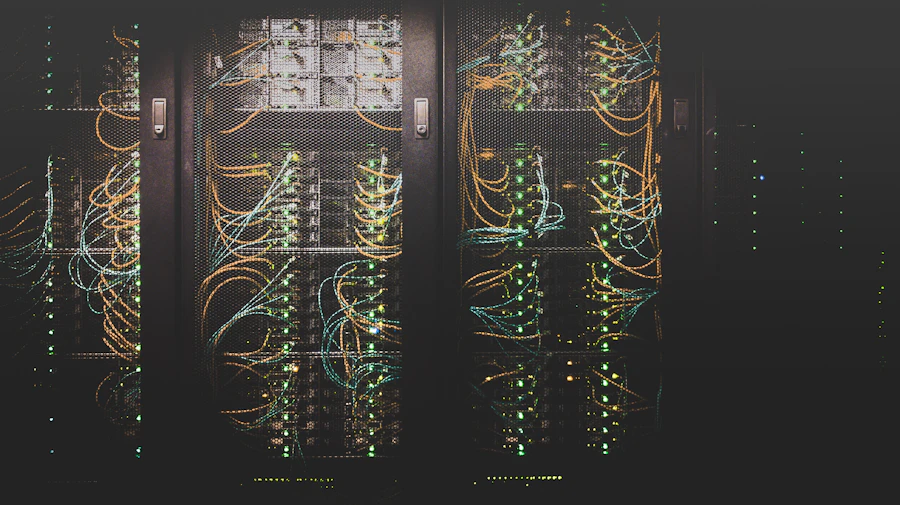
Key visuals should include clean interface screenshots, global network connectivity maps, security shield iconography, diverse students using technology in various global settings, and data center or cloud infrastructure imagery.
Search engine optimization should focus on online university technology support, distance learning technical requirements, virtual campus platform, educational technology infrastructure, and secure online learning environment.
The conversion goal is technical support contact, prospective student confidence building, and partnership inquiry.

Whether you are a prospective student evaluating whether your device and connectivity can support rigorous online study, a faculty member seeking tools to amplify your pedagogical impact, or a research partner requiring secure collaboration infrastructure, Information Technology Services at Highstone Global University delivers.
Explore Our Technical Requirements. Contact Support. Partner With Our Innovation Team.